


Nox Vahn, Nick Stoynoff and Rodd Sim Bring Progressive House to the Austin Underground

At The Baths, three artists with distinct musical journeys offer a deeper look at progressive house, creative independence, and the connections that keep the scene alive.
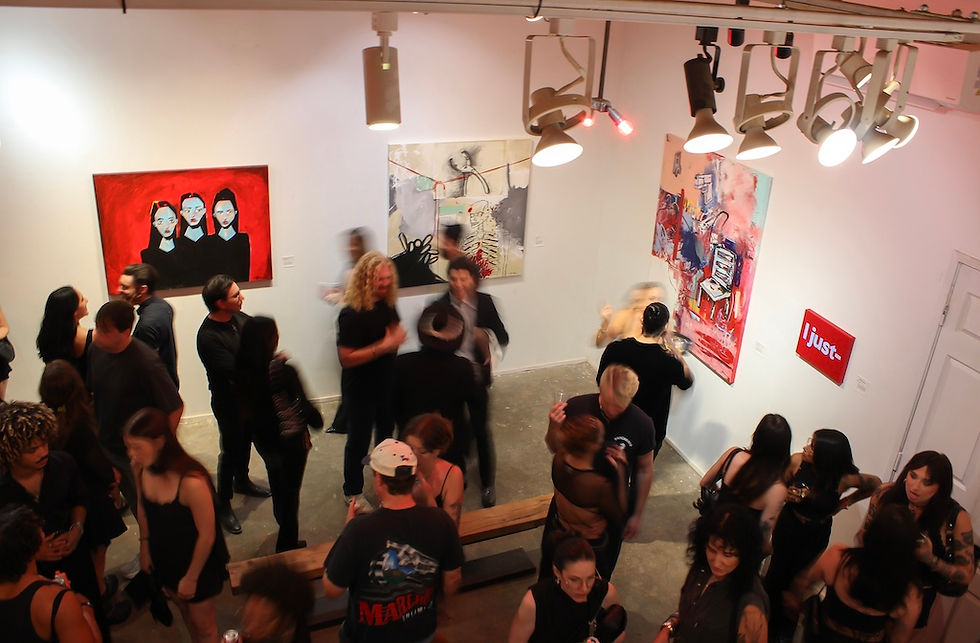
On October 16, 2026, Austin's progressive house community gathered at The Baths for an intimate night of deep, melodic electronic music, headlined by Anjunadeep artist Nox Vahn alongside Nick Stoynoff and Rodd Sim. With its underground atmosphere and a shared appreciation for the genre’s darker, more hypnotic sounds, the setting deepened the sense of immersion, letting the music and its community truly take center stage.

As a longtime fan of deep house, I was especially excited to see Nox Vahn. His collaboration with Marsh, "Nemora," remains a favorite on my playlist. I've always been drawn to music that takes you somewhere, and Nox has a gift for creating that sense of movement through shadowy textures, beautiful melodies, and unexpected moments of tension. Just before his set, I sat down with him in the green room at The Baths to hear about his journey into music, how he approaches creating his tracks, and the connections music can create between people.

Within the Anjunadeep family, Nox Vahn has carved out a distinct sound that blends deep, melodic elements with a darker, cinematic sensibility. His collaborations with artists including Marsh, Mimi Page, and Jody Wisternoff have helped bring his music to listeners well beyond the traditional dance floor.
During our conversation, I was struck by how much of his sound traces back to his early musical education. Classically trained from childhood, Nox began with piano before exploring other instruments and eventually turning to electronic music production around 2007. Even then, he gravitated toward darker compositions, an instinct that continues to shape his work.
When I asked how he would describe his music to someone hearing it for the first time, he emphasized the journey rather than the payoff. Instead of relying on fist-pumping drops, he wants to draw listeners through contrasting passages of beauty, tension, and darkness. His influences extend beyond electronic music, encompassing film scores, video games, and everyday life. It's an approach I appreciate. The most compelling music creates space for you to discover those feelings yourself.
We also explored the unpredictable relationship between creativity and the people who experience it. Artists can spend countless hours building something from an idea, an emotion, or a fleeting moment of inspiration, yet have little control over how that work resonates once it reaches the world. Nox spoke about being surprised by how people connect with his music, particularly across cultures and language barriers.
"We don't fully understand what music is,” Nox shares. “We don't fully understand why it resonates with everyone."
That observation stayed with me. Music can communicate something deeply personal while creating a shared experience among people who might otherwise have little in common. No translation is required.
Nox was also looking forward to returning to Austin, having previously played at Kingdom and The Concourse Project. After spending the past year working on new material, he was eager to test fresh sounds during his set. And at The Baths, his atmospheric approach felt particularly suited to the intimate underground setting.

The following day, I sat down with Chicago-based DJ and producer, Nick Stoynoff, founder of NOFF Records. With more than 15 years in dance music, Nick has witnessed multiple generations of technological shifts, changing discovery habits, and evolving industry expectations.
His early influences included Paul Oakenfold's late-'90s Essential Mixes and the progressive sounds of Sasha and John Digweed. We reminisced about discovering music before streaming platforms and instant track identification, when finding a record meant scouring specialty shops, tracking down imports, and sometimes paying a premium for a single track. The process demanded patience, but it also made each discovery feel earned.
Nick’s path eventually led to music production, DJing around Chicago, and work as a studio engineer. Like many artists, his career didn't follow a straight line. After a period of reduced creative output, he returned to music during the COVID-19 pandemic, unexpectedly opening a new chapter in his career. In the years since, that renewed focus has brought opportunities with respected progressive labels, collaborations, and continued growth for his own imprint, NOFF Records.
One of the most compelling parts of our conversation was Nick's perspective on longevity in the music industry. Artists face constant pressure today to release music, maintain visibility, and keep pace with everyone around them. Nick challenged that expectation, emphasizing that a great release can have far more impact than putting out music simply to maintain a schedule.
We discussed burnout, comparison, and the importance of developing an individual voice rather than conforming to someone else’s expectations. His approach to NOFF Records reflects on a philosophy: a carefully curated roster and an emphasis on creative freedom.
His new Shared Frequencies series, which launched on November 6, brings together four artists from South America, with plans to explore music from other regions worldwide. The project reflects a broader interest in connecting artists across geographical boundaries without sacrificing their individual perspectives.
Nick also shared his impressions of Austin following his first visit to Texas. He was struck by the passion of the local progressive house community and the energy surrounding the event. For a city with an evolving electronic music landscape, that enthusiasm offers an encouraging sign of the genre’s growing reach.

Before the event, I also sat down with Rodd Sim, a DJ, producer, and founder of Auricle Recordings whose involvement in electronic music dates back to 1998.
Rodd grew up in Los Angeles during the early underground rave scene, when finding a party could mean following a series of map points to a warehouse or a remote desert location. He described a community of people from different backgrounds who found belonging in music when they weren't necessarily finding it elsewhere. That sense of connection drew him into the scene, first through DJing on vinyl and eventually into music production.
Influenced by the early trance era and artists such as Paul van Dyk, Paul Oakenfold, Ferry Corsten, and Armin van Buuren, Rodd has since developed a sound rooted in progressive house while retaining elements of classic trance.
Our conversation turned to the way electronic genres continue to overlap. Progressive house, melodic techno, breaks, and other styles increasingly borrow from one another. Rodd sees this evolution as an invitation to collaborate and explore sounds that resist easy categorization.
His personal journey, however, has involved more than musical evolution. Rodd spoke openly about his past struggles with addiction and his decision to step away from the industry. For nearly five years, he distanced himself from an environment that had become unhealthy and uncertain whether he would ever return.
During that time, he focused on himself, found support in his relationship with his wife, and gradually rediscovered his love for making music. Since returning to production in 2023, he has been building a new chapter, including relaunching Auricle Recordings after a decade-long hiatus.
The label’s return includes a 16-artist compilation and a renewed vision centered on collaboration, creative freedom, and music that crosses genre boundaries. What stood most to me was his renewed appreciation for the simple joy of making music. After stepping away and finding his way back, he approaches the scene with a different perspective, one grounded in the creative process, meaningful relationships, and the freedom to do what he loves.

Across these three conversations, a common pattern emerged: there is no single path through the music industry, and longevity often comes from finding a relationship with music that can evolve alongside you.
Nox Vahn explores the emotional space between artist and listener. Nick Stoynoff champions quality, patience, and creative independence in an industry that rarely slows down. Rodd Sim has found his way back to music on his own terms, rediscovering the joy that first drew him to the scene.
Their journeys differ, but each reflect a deeper connection to the music itself and to the communities that grow around it. Together, their perspectives remind us that electronic music is about more than releases, bookings, and genre labels. It is also about discovery, personal expression, and the connections that endure beyond a single night.
Austin’s progressive house community is part of that larger story. Nights like this create space for longtime listeners, emerging producers, touring artists, and curious newcomers to meet through a shared appreciation for the deeper, darker, and more melodic side of dance music. As Austin’s electronic music landscape continues to evolve, these gatherings help sustain the connections that allow a scene to grow.
For a closer look at the people behind the music, tune in to my upcoming Redefining Music interviews, releasing Wednesday, November 11, and Wednesday, November 18. Rodd Sim's episode arrives November 18.

Comments