


APAULL Is Proof It’s Never Too Late to Build Your Sound
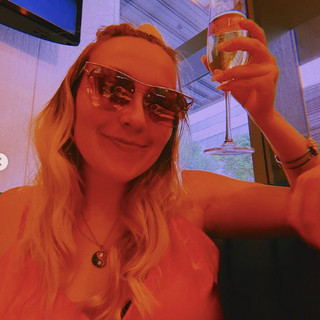
What happens when an artist disappears for three decades, then returns with something urgent to say?
That question defines apaull, the Dutch-Canadian producer crafting techno, house, and ambient-rooted music shaped by memory, frustration, and modern life. After connecting at the 2026 Winter Music Conference in Miami, we spoke with apaull about re-entering the music industry after 30 years, navigating a transformed industry, and why authenticity matters more than ever in today’s noise-filled landscape.

Apaull challenges one of dance music’s biggest myths. Success belongs only to the viral or constantly visible. Instead, apaull’s return represents something increasingly rare: an artist shaped from lived experience rather than trend cycles. Some may let speed, algorithms, and short attention spans dominate them, yet apaull offers a slower, sharper vision rooted in craft, identity, and truth.
The Comeback Story
Apaull’s departure from music was gradual, like a quiet drift that often happens when adult life takes over. While scenes evolved and sounds changed, he built a full career as an environmental scientist and later ran his own consulting company.
“I built a full career as an environmental scientist and owned an environmental consulting company with many employees,” he says. “I sold the business in 2019, and that gave me something incredibly valuable: time.”

That time became the turning point. Music had always been part of his life. Raised in a family where his father played professionally in a military band and his mother played piano, he was always surrounded by creativity. Apaull himself started as a drummer, but practicality got in the way.
“I was a drummer, but hauling drums around was never easy, so music gradually went into hiatus for me.”
Then technology changed everything. Software, laptops, and digital workstations had replaced the heavy gear of earlier eras. “I no longer needed a full drum kit,” he notes. “I could create music on the same laptop I use for everything else. That realization completely blew me away.”
While the world slowed down during the pandemic, apaull accelerated creatively. Apaull immersed himself in Ableton, modern production workflows, and online coursework through 343 Labs in New York. “With nowhere to be for a while, I used that period to really sink my teeth into learning how to write music,” he says. “That experience helped set me on the path I’m on now.”
Music In A New World
Returning after 30 years meant stepping into an entirely different ecosystem. The analog scenes of the past had given way to streaming platforms, algorithmic discovery, content pressure, and endless competition. Rather than chase trends, apaull chooses discipline, mentorship, and artistic standards.
“I’ve built a team that helps guide the creation of my work, and I truly view what I do as art in the most literal sense,” he says. “My executive producer is Abe Duque, based in New York, an absolute OG in electronic music. I’ve been meeting with him weekly for nearly five years.”
For apaull, quality defines his success. This mindset gives his music an uncommon confidence: less interested in fitting in, more focused on standing up technically and creatively: “I create what I create, but I want it to be as technically strong as possible. I never mind if someone says they don’t like it, or that it’s strange or unconventional. What I never want anyone to say it was poorly produced.”
Sound + Influences
To understand apaull’s music, look back to the jagged, synth-heavy landscape of the mid-1980s through the early 2000s. Apaull’s influences span industrial, synth-pop, ambient, and electronic experimentation.
“A lot of it comes from industrial music: Skinny Puppy, Front Line Assembly, KMFDM. On the other side, I love synth-pop bands like Depeche Mode and Heaven 17. I also really love groups like The Orb. I’ve always been fascinated by how they use atmosphere and texture.”

One of his most recognizable techniques is the use of unexpected vocal fragments and samples, like unexpected snippets that create tension, emotion, or commentary. “I’ve always liked those moments, whether pulled from media, news, or random recordings. It’s another way to build meaning inside a track.”
His latest release, Gunfactor, a 10-track album, reflects that wide palette. Industrial edges meet synthwave textures, indie-dance momentum, and darker techno undercurrents. Rather than obsess over genre labels, apaull focuses on cohesion.
“Genres are always a strange thing to define anyway,” he says. “For me, it’s more about continuity across the work rather than fitting into a box.”
Art With Meaning
For apaull, production quality is only the vessel. Meaning is the destination. Apaull’s music often carries political undertones, cultural commentary, or personal frustration, but never in a preachy way. Instead, he prefers to create space for interpretation. This philosophy makes his music more open-ended and human. A track can begin as his personal reaction to the world, but for the listener, it can become something entirely different.
“I believe art doesn’t need to fully explain itself,” he says. “You don’t have to understand exactly what the artist was thinking for it to resonate.”
Ultimately, apaull’s desire to contribute something substantiel fuels his return to the studio. As he navigates this second chapter of his creative life, his definition of success is refreshingly simple.

“I hope the conversations come across like: ‘Wow, that sounds really good - how did you create that?’ or “His tracks are really coming together, I want to listen to it and share it,” he says. “Ultimately, I just want the work to resonate. I want it to be well-produced, original, and cohesive - something that feels like its own sound. If it reaches that point, I’ll be very happy with where it ends up.”
Why EDM Texas Connected
Though apaull’s roots are Dutch-Canadian, his ethos feels familiar to Texas dance culture. Texas has long respected artists who build from the ground up: self-funded creators, studio obsessives, independent thinkers, and producers more focused on substance than image. Apaull’s story fits naturally within that tradition.
On May 15, apaull will bring his live set to Brighton, UK, opening for techno icon Dave Clarke, who also contributed photography for Gunfactor’s artwork. It is a fitting next chapter for an artist who chose growth over timing, depth over trends, and reinvention over regret. His story is a reminder to the Texas scene and beyond that, there is no expiration date on creative purpose, and that sometimes the strongest sound arrives after the longest silence.
Follow apaull on his socials and music links, and don’t forget to listen to Gunfactor.


Comments